As educational design shifts toward more holistic and child-centered environments, nature-integrated school architecture is gaining global attention. Research consistently shows that access to daylight, outdoor learning spaces, natural materials, and passive climate strategies improves student concentration, emotional well-being, and overall academic performance. Instead of treating nature as an external landscape element, contemporary school design increasingly embeds it into the spatial, structural, and pedagogical framework of the building itself.
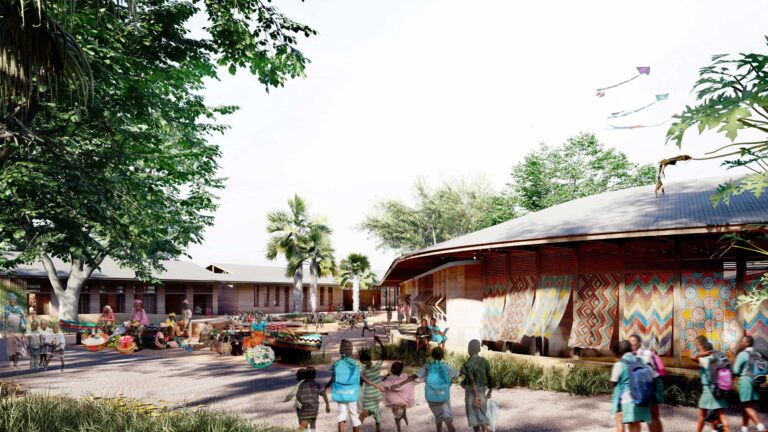
The proposal for Marguerite d’Youville School demonstrates how architecture can dissolve the boundary between built form and natural environment while maintaining strong environmental performance. The project rethinks the conventional institutional school typology and replaces it with a village-like composition centered around landscape, microclimate, and biophilic principles.
The Marguerite d’Youville School project was one of the 2020 Lab-École competition’s laureates and was the grand winner in the Unbuilt project category at the AZ Awards by Azure magazine in 2021. The program consisted of a new 3440m² construction on the current site of the Marguerite-D’Youville school, near the downtown core of Saguenay’s Chicoutimi district. The new school will include 15 classrooms; 3 for pre-school and 12 for elementary classrooms. The program also includes other facilities like gymnasiums, spaces for collaboration and dining areas.
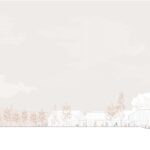
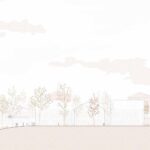
The proposal aims to reflect a typical Saguenay living environment, a village strongly intertwined with its natural environment, anchored in the culture of its residents. The building is divided into distinct houses, arranged around an outdoor courtyard connected by glass passages. The design intends to deconstruct the style of the conventional school and transpose it onto a livable scale, that is accessible and a better environment for the children. The school uses a characteristic pedagogical approach, described using the term ‘nurture’, lending a reassuring and familiar architecture to it.
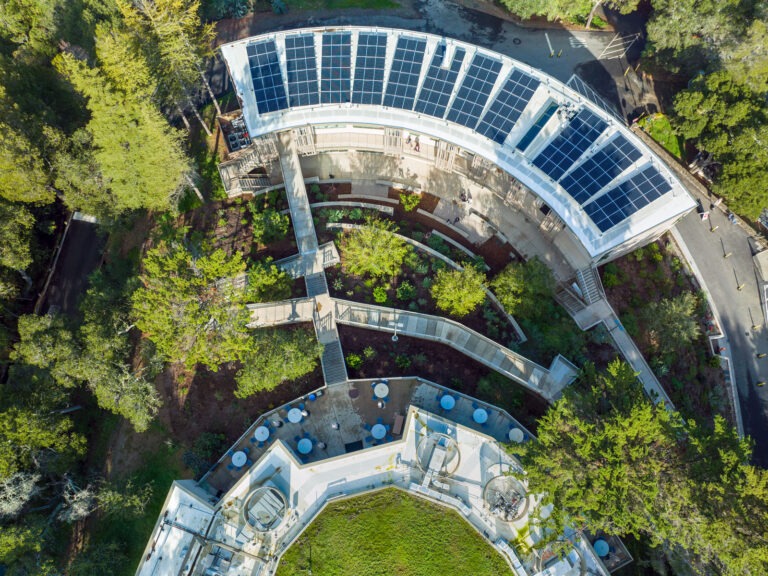
The project’s location is at the heart of an urban fabric, broken up by large islands of vegetation, the project proposes an enriching and complementary landscape within its surrounding landscape. In response to the rugged topography of its context, the building is designed over two main levels, with the ground level being accessible from the street, and the garden level through the courtyard, which the project’s ‘U’ shaped form allows. The courtyard is conducive to both recreational and pedagogical activities. Sculpted in harmony with weather fluctuations, the building’s morphology allowed the space to be fully south-facing, while being protected year-long from dominant winds, resulting in a pleasant microclimate that varies with the seasons. Multiple entrances are planned and express themselves coherently for the building’s different users.
The project is articulated across three main construction areas; one gathering the spaces open to the community, and two others gathering the different learning communities and staff areas. All the classrooms get ample lighting utilizing the northern light. The shared spaces and passages that overlook the yard creates transient zones between the movement and noise of recess, and calm that fosters concentrations necessary for a classroom learning atmosphere.
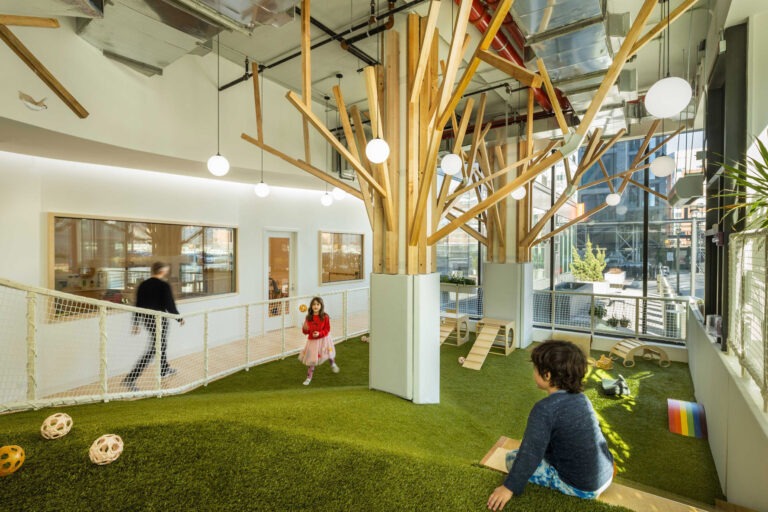
The architectural project celebrates a thoughtful connection with the territory by inspiring itself from vernacular architecture and the use of regional materials, raw or recycled, that encourage a circular economy. The structural framework of the smaller houses is made of wood, the shared areas use a system of laminated-bonded wooden beams. The wood from local sawmills is highlighted by both the interior and exterior coatings. This material, with its delicate aesthetic, will bring warmth and acoustic comfort to the children.
Saguenay-Lac-Saint-Jean being the cradle of the aluminium industry, the project aimed to use this resource for multiple purposes, such as for pouring the concrete foundations and the floor slabs. The valorisation of residual aluminium waste for the construction of the cement paste allows a more sustainable cement to be obtained. The reuse of wooden beams, recycled from the existing school, will be used in the delivery of raw materials, to build the exterior furnishings.
Hydronic radiating floor will be used for the heating and cooling for the building. New air will be distributed through a ventilation principle, allowing for the totality of diffusers to be integrated within the architectural elements. The building envelope’s excellent performance, coupled with passive bioclimatic strategies, provides reduced capacity, lower cost and completely integrated heating and cooling systems. The characteristics of passive design reinforce the school’s biophilic approach: favouring solar light, allowing each room’s windows to be opened, etc.